The single rule: never follow someone who approaches you. Every scam on this page starts with a stranger offering help you did not ask for. People you approach (a shopkeeper, a café waiter, a police officer) are almost always genuinely helpful.
All ten at a glance
| Hustle | Where | Your answer |
|---|---|---|
| "It's closed today" / "Berber market today" | Souks, near monuments | Keep walking; check the map |
| Tannery "free visit" | North Medina, Bab Debbagh | Decline, or go with a licensed guide |
| Unofficial guide | Everywhere in the Medina | "La, shukran", no eye contact |
| "Free" directions | Souk junctions, at dusk | Ask a shopkeeper instead |
| Henna that starts without asking | Jemaa el-Fna | Pull your hand back, agree price first |
| Monkey or snake on your shoulder | Jemaa el-Fna | Step away; do not photograph |
| Food stall extras and vague prices | Jemaa el-Fna at night | Ask prices, send back what you did not order |
| Taxi "no meter" or "no change" | Square, Majorelle, airport | Meter or agreed price, small notes |
| Fake Majorelle tickets / "skip the line" | Outside Majorelle, random websites | Official site only |
| Carpet and "cooperative" shops | Souks, day-trip stops | Buy only what you want, at your price |
1. "It's closed today"
The most common line in Marrakech. "The palace is closed", "this street is closed, prayer time", "the square is closed, follow me", or the upbeat version: "today only, the Berber market / the tannery festival". The goal is to walk you somewhere else: a shop, the tannery, a herbalist, a riad where he gets commission.
Answer: nothing in the Medina closes at random, and monuments are open every day except a few public holidays (opening hours are on each of our guides, e.g. Bahia, Ben Youssef). Smile, "la, shukran", and carry on in the direction you were going.
2. The tannery tour
A young man says the tanneries are "just here" or that today is the day the Berbers work the skins. He walks you through lanes you could never find again, someone hands you a sprig of mint for the smell, you get five minutes on a rooftop, then a leather shop, then a demand for money: for the "guide", for the "tannery family", sometimes 200 MAD or more and sometimes with friends standing around.
- If you want to see a tannery, do it with a licensed guide on a Medina walking tour, or ask your riad.
- If you are already there, agree a fee before going up (a few tens of dirhams is fair), pay once, and leave. You are not obliged to enter the shop.
- Honestly: the Marrakech tanneries are smaller than the famous ones in Fes. Many people skip them and miss little.
3–4. Fake guides and "free" directions
Unofficial guides attach themselves ("I am a student, I practise my English", "I work at your riad") and walk with you, then ask for money at the end, often more than a licensed guide would have cost. At dusk, kids and young men at souk junctions tell you "the square is that way" (it is not) and then offer to take you for a fee.
- Download an offline map before you go. It works in most of the souks; under the covered sections, walk to the next open junction.
- Ask shopkeepers, not passers-by. They are stationary, they want your goodwill, and they will point.
- Real guides carry an official badge and never approach you in the street.
- If you did accept help, 10–20 MAD for a short walk is fair. Hand it over, say thank you, and leave; do not negotiate upwards.
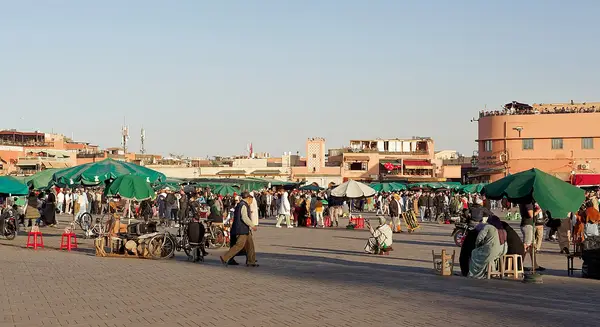
5–7. Jemaa el-Fna: henna, animals and food stalls
Henna. A woman takes your hand, starts drawing "just a small flower, a gift", then asks for 200 MAD or more for the design that has quietly grown up your arm. Pull your hand back immediately if you did not ask. If you want henna, agree the price and design first (50–100 MAD for a simple one is common), and insist on natural brown henna: black henna can contain PPD, which causes skin reactions.
Monkeys and snakes. A handler drops a Barbary macaque on your shoulder or drapes a snake on you, and someone takes your photo with your phone. Then comes the bill. Step away before it happens; keep moving through that corner of the square. The animals are kept in poor conditions and paying for the photo pays for that.
Performers. Musicians, storytellers and acrobats are fair game for a tip. If you photograph or film, 10–20 MAD is the going rate. Do it with a smile, not under protest.
Food stalls. The evening grills are a highlight, but some stalls bring bread, olives, sauces and salads you did not order and charge for all of it, or quote vague prices. Ask the price of each dish, send back anything you did not order, and check the bill. Busy stalls with Moroccan families eating at them are the safest bet. Expect 30–80 MAD a plate. Full price list for the square.
8. Taxis: the meter and the change
Petits taxis in town are supposed to use the meter. Many drivers near the square, Majorelle and the big hotels will say it is broken and quote 100 MAD for a 25 MAD ride. In 2022 a driver lost his licence after charging a foreign YouTuber 350 MAD for an airport run, so the authorities do act on complaints.
- Before getting in: "compteur?" (meter). No meter, no ride, or agree the fare clearly: 20–40 MAD for any Medina–Gueliz hop.
- Walk 200 metres away from tourist spots and hail a passing taxi; the price halves.
- Carry small notes. "No change" on a 200 MAD note is a classic way to keep the difference.
- Use inDrive or Careem: price agreed in the app. Uber does not operate in Morocco.
- From the airport, fares are flat and higher: see airport to Medina.
9. Fake Majorelle tickets and "skip-the-line"
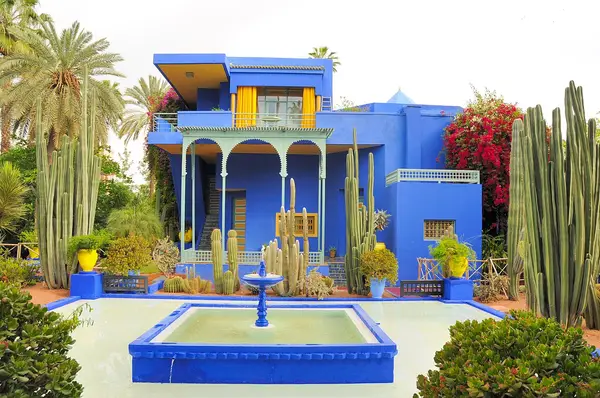
Jardin Majorelle has no ticket desk at the gate. Tickets are sold only on the official site, tickets.jardinmajorelle.com, for a fixed date and 30-minute slot (170 MAD; ~300 MAD with the YSL Museum). The Fondation says it refuses tickets from unauthorised sellers.
- Men outside the gate offering tickets, help with your QR code or a "skip-the-line" are not staff. Walk past to the scanner.
- Random websites selling bare "Majorelle entry tickets" at a mark-up may not get you in. Guided tours and combos from licensed operators on the big platforms are fine: the operator books the entry for you.
- Check real availability on our live availability page; if your date is full, here is what works.
10. Carpet shops and "cooperatives"
The carpet shop is less a scam than a performance: mint tea, a dozen rugs unrolled at your feet, a story about the Berber women who wove them, a price in the thousands and a suggestion to ship it home. Similar shows happen at argan and herbalist "cooperatives" on day-trip stops.
- You owe nothing for the tea. Leaving without buying is normal.
- Know the fixed prices first at the Ensemble Artisanal on Avenue Mohammed V, then bargain in the souks. 40–60% of the opening price is a common landing point.
- Pay by card for big items and keep the receipt; take small rugs with you rather than shipping.
- "Cooperative" on a sign does not guarantee anything. Real women's argan cooperatives exist; so do shops that use the word.
- Nobody who brought you to the shop is doing it for free. His commission is in your price.
Keep perspective. These hustles cost you money and patience, not safety. For the bigger picture (theft, women travellers, night-time, emergency numbers), read Is Marrakech safe?, then go and enjoy the city: most people you meet are simply kind.
Marrakech scams: frequently asked questions
What is the most common scam in Marrakech?
The "it's closed" redirect and its cousin, the unofficial guide. Someone tells you the road, the palace or the square is closed today, or that there is a Berber festival or market "only today", and offers to show you the way. The walk ends at the tannery, a carpet shop or a herbalist where he earns commission, followed by a demand for payment. Nothing in the Medina closes at random. Keep walking.
Is the Marrakech tannery a scam?
The tanneries are real, near Bab Debbagh in the north-east of the Medina, and men really work there. The scam is the "free visit": a stranger leads you there, hands you mint for the smell, gives a quick tour, then a leather shop and a demand for 100–200 MAD or more, sometimes aggressively. If you want to see them, go with a licensed guide as part of a Medina tour, or go yourself and agree any fee before going in.
How do I recognise an official guide?
Licensed guides carry an official badge (a card with their photo) issued by the authorities and will show it if asked. They do not approach you in the street. Platforms such as GetYourGuide and Viator list licensed operators. Anyone who starts walking with you uninvited is not a guide, whatever he says.
Can I buy Majorelle tickets from someone at the gate?
No. Majorelle tickets are sold only online at tickets.jardinmajorelle.com, with a date and 30-minute slot, and there is no ticket desk at the entrance. The Fondation says it refuses tickets from unauthorised sellers. Men outside offering tickets or "skip-the-line" are not staff. If your date is full, see what still works when Majorelle is sold out.
How much should I tip or pay for a photo?
If you photograph a performer on Jemaa el-Fna, 10–20 MAD is the going rate; agree before you raise the camera. For the snake charmers and monkey handlers, the better answer is not to photograph them at all: the animals are kept in poor conditions and the price after the fact is often 100 MAD or more.
What do I do if someone will not leave me alone?
Stop engaging: no eye contact, no explanations, a short "la, shukran" (no, thank you) and keep walking. If it escalates, walk into a shop, café or hotel, or towards the police on Jemaa el-Fna. Hustlers want money, not trouble, and they leave as soon as you are no longer alone with them.
More Marrakech guides
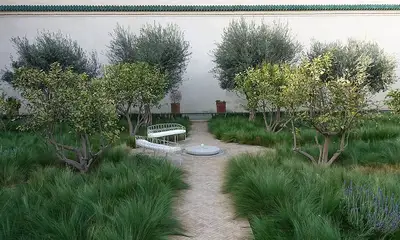
Le Jardin Secret
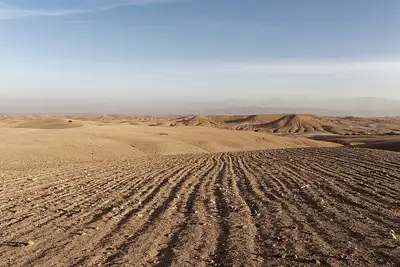
Agafay Desert
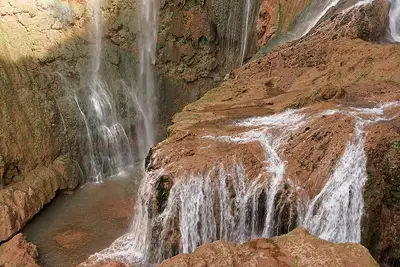
Ouzoud Waterfalls
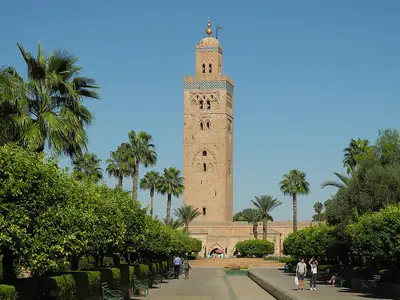
Koutoubia & Medina
Also useful: Airport to Medina · Marrakech in 2 days · Things to do · Hammam in Marrakech · Dar El Bacha · Atlas Mountains