The one rule: the Ourika river rises in minutes when storms hit the mountains upstream, even if the sky above you is blue. From June to October especially, check the mountain forecast, and leave the riverbed and the terraces at the first sign of rain or brown, rising water.
Prices 2026
| Option | Price | Notes |
|---|---|---|
| Shared minibus tour | €15–40 pp | Pickup, driver-guide, stops; lunch sometimes included |
| Private driver for the day | ~€60–120 per car | Your pace, your stops; best value for 3–4 people |
| Shared grand taxi, each way | ~30–50 MAD a seat | Cheap, slow, change at Tnine Ourika |
| Local guide to the upper falls | ~150–300 MAD per group | Agree price and route first |
| Lunch on a river terrace | 80–150 MAD | Tajine, salad, drink; ask the price first |
| Entry to the valley and falls | Free | Parking or small local fees possible |
Ranges from platform and operator listings and 2026 visitor reports, checked October 2026. The cheapest tours are big groups with long cooperative stops; read the itinerary.
What a typical day looks like
- 8:30–9:00 pickup in Marrakech.
- The plain and the first foothills, often with a stop at an argan oil cooperative (watch, taste, no obligation to buy). On Mondays the market at Tnine Ourika is worth a look.
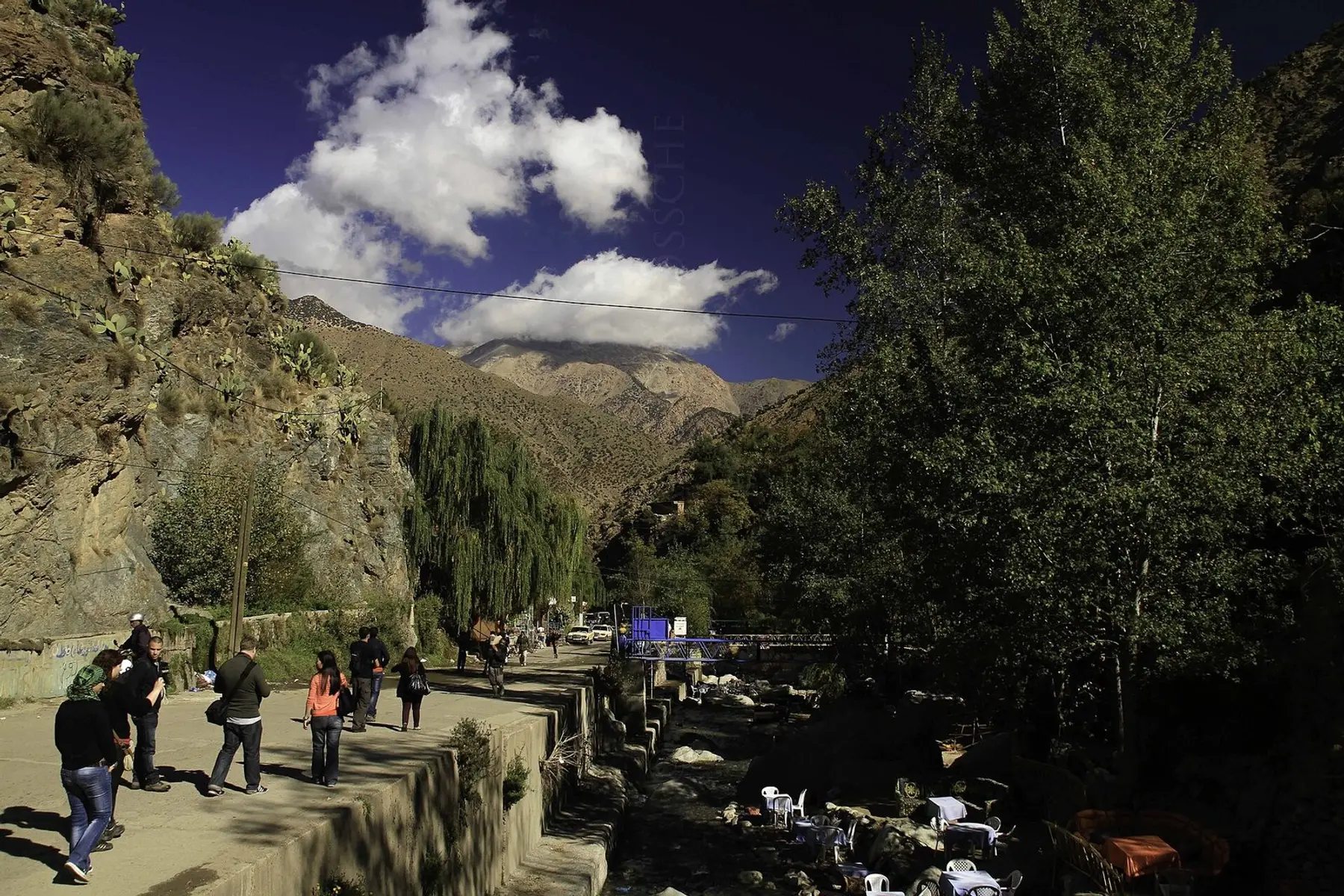
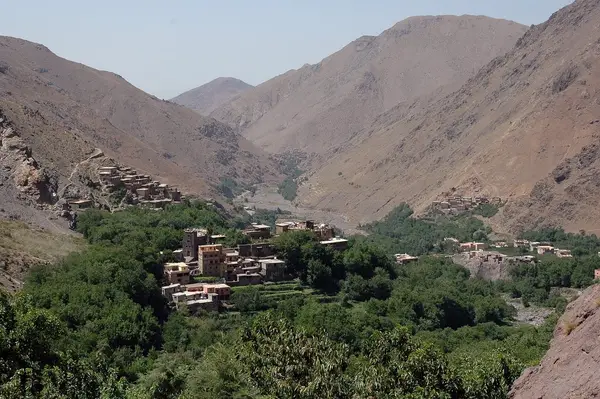
- The valley: the road follows the river past Amazigh villages, pottery stalls and terraces built on stilts over the water. Many tours stop at a traditional house for tea.
- Setti Fatma (about 1,500 m): the end of the road. Cross the river and climb to the first fall, or further.
- Lunch on a riverside terrace, sometimes with tables standing in the shallows in summer.
- Back in Marrakech around 16:00–18:00.
The waterfall hike
| Goal | Time (return) | Difficulty |
|---|---|---|
| First waterfall | 45 min – 1 h 15 | Easy scramble; trainers with grip |
| Second and third falls | 1.5 – 2.5 h | Steep sections, smooth wet rock |
| All seven falls | 2 – 4 h | Strenuous; narrow ledges between the 5th and 7th |
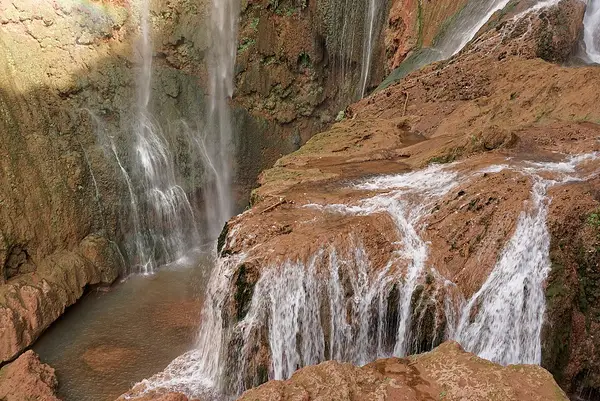
Almost everyone stops at the first fall, where there are cafés selling juice and tajine on the rocks. It is a fine place to end. The upper falls are quieter and prettier but not for small children, sandals or anyone unsteady on wet rock.
Guides at Setti Fatma
- Not needed for the first fall: the path is obvious and full of people.
- Sensible for the upper falls, where the route splits and the rock is slippery. Young men at the bridges offer to guide. Agree price, route and turnaround point before you set off.
- On a tour, the driver usually hands you to a local guide at the village. Check whether that guide is included in your price or tipped separately.
Doing it on your own
- Shared grand taxi: from the Bab er-Robb area of Marrakech towards Ourika, changing at Tnine Ourika for Setti Fatma. About 30–50 MAD a seat each way; taxis leave when full. Return before late afternoon, when they become scarce.
- Private taxi or driver: agree the full-day price, the waiting time and the stops in advance.
- Rental car: the road is paved all the way; parking at Setti Fatma is easy on weekdays, chaotic at weekends.
When to go, and the flood season
- March – June: the best. The river is full from snowmelt, the falls are strong, the valley is green.
- July – September: busy with Marrakchi families escaping 40°C. Weekends are packed. Afternoon storms over the Atlas are most likely in these months.
- October – November: golden poplars, fewer people, pleasant walking; autumn rains can also bring floods.
- December – February: cold, quiet, sometimes snow higher up. The first fall is still a good walk.
Flash floods are real. The flood of 17 August 1995 lasted only a few hours but killed more than 200 people in the valley, from a storm that barely touched the villages downstream. A warning system now monitors the upper valley, but the rule stays the same: dark clouds over the peaks, brown water, a rising river, or a warning from locals means you move to high ground and leave the terraces in the riverbed.
City weather month by month: best time to visit Marrakech.
Things nobody tells you
- Avoid weekends and public holidays if you can; on a summer Sunday the last kilometres can take an hour.
- Ask lunch prices before you sit. The terraces in Setti Fatma have touts; prices on the walls are not always the prices on the bill.
- Bring: shoes with grip, a towel, a dry bag for your phone, cash in small notes, water.
- Cooperatives are a sales stop. Real women's argan cooperatives exist; so do shops using the word. See Marrakech scams.
- Short on time? Ourika fits a free afternoon better than Ouzoud (2.5–3 h each way). With children, it is one of the best days out: see Marrakech with kids.
- All the other ideas are on our things to do in Marrakech list.
Ourika Valley: frequently asked questions
How much is an Ourika Valley day trip?
Shared minibus tours cost about €15–40 per person with pickup, a driver-guide and stops; some include lunch. A private driver is roughly €60–120 per car for the day depending on the season and the car. Doing it yourself by shared grand taxi costs about 30–50 MAD a seat each way.
How far is the Ourika Valley from Marrakech?
Setti Fatma, the village at the end of the road where the waterfalls start, is about 60–65 km south-east of Marrakech: 1 to 1.5 hours by car, depending on traffic and stops. The valley itself begins after 30–40 minutes.
How hard is the hike to the Setti Fatma waterfalls?
The first waterfall is a 20–40 minute scramble over rocks and makeshift bridges: fine for anyone reasonably fit in trainers with grip. Above the second fall the path gets steep, narrow and slippery. Going to the seventh fall and back takes 2–4 hours and is for confident walkers only.
Do I need a guide for the Ourika waterfalls?
Not for the first fall; the path is busy and easy to follow. For the upper falls a local guide is sensible. Guides wait at the bridges in Setti Fatma; agree the price and the turnaround point before you start. Around 150–300 MAD for a small group to the upper falls is typical.
When is the best time to visit Ourika?
March to June, when the river is full and the valley green, and again in October–November. Summer is hot in Marrakech and the valley fills with local families, especially at weekends. Winter is cold but quiet, and the lower fall is still worth it.
Is the Ourika Valley dangerous?
Normally no, but the river floods suddenly. On 17 August 1995 a summer storm upstream sent a flash flood through the valley and killed more than 200 people. Storms build over the Atlas on summer and autumn afternoons while Marrakech stays sunny. If rain is forecast in the mountains, or the water turns brown and rises, leave the riverbed at once.
Ourika or Imlil?
Ourika for waterfalls, river terraces and a shorter, livelier day. Imlil for a real mountain walk, fewer crowds and the Toubkal views. Both are about an hour and a half away. Compare them in our Atlas Mountains day trip guide.
More Marrakech guides
Agafay Desert
Ouzoud Waterfalls
Koutoubia & Medina
Jardin Majorelle
Also useful: Marrakech in 3 days · Prices & opening hours · Best time to visit · Menara Gardens · Essaouira day trip · Marrakech scams